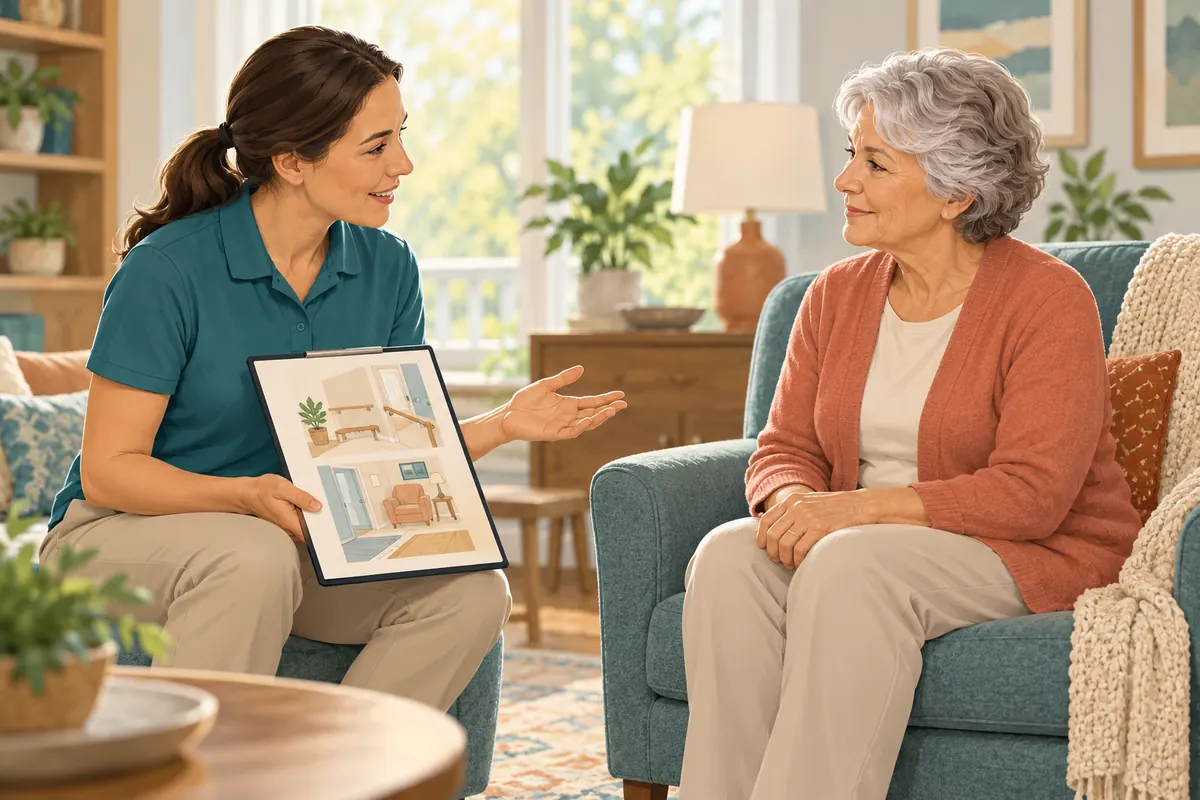
A home safety review is more useful when it leads to specific follow-up tasks. Walk through the home with the person who lives there, ask what feels difficult and record the areas that need attention. This general checklist helps organize the review; it does not replace an individualized assessment.
Look at everyday routes
Start with the routes used most often: the entrance, the path to the bathroom and the space around the bed or usual chair. The National Institute on Aging highlights clear walking areas, secure stair rails, good lighting and bathroom grab bars among its room-by-room fall prevention recommendations.
Record observations in plain language. “The hallway light is hard to reach from the bedroom” is more actionable than “lighting is poor.” Include the person’s own experience of the space.
Use four columns
- Location: name the room or route.
- Observation: describe what you noticed without diagnosing a problem.
- Next step: write who should evaluate or address it.
- Follow-up: record the responsible person and the agreed date.
This approach separates easy household organization from changes that need professional advice or installation. Do not improvise supports or assume that a product is suitable simply because it is advertised for older adults.
Ask about access and daily use
Can the person comfortably reach the items they regularly use? Is there a practical place to keep a phone and important contact details? Are visitors able to find the correct entrance? Ask these questions during the review rather than rearranging the home without permission.
Personal preference matters. An arrangement that looks tidy to a visitor may disrupt a familiar routine. Discuss proposed changes and explain the purpose before moving furniture or belongings.
Identify questions for a professional
Write down concerns about mobility, transfers or using equipment and bring them to the care team. NIA notes that an occupational therapist, physical therapist or nurse may assess home safety after a fall. The appropriate professional can advise on changes for the person’s needs.
Review changes after they are made
Check whether the change actually helps the person use the space. Keep a dated list of unresolved questions and revisit the review when routines or support needs change. A checklist is an ongoing planning tool, not a guarantee that falls or injuries will not happen.
If you need help identifying local services, browse our home care directory and ask whether a provider offers the assessment you need. Verify qualifications and service scope directly before making an arrangement.